
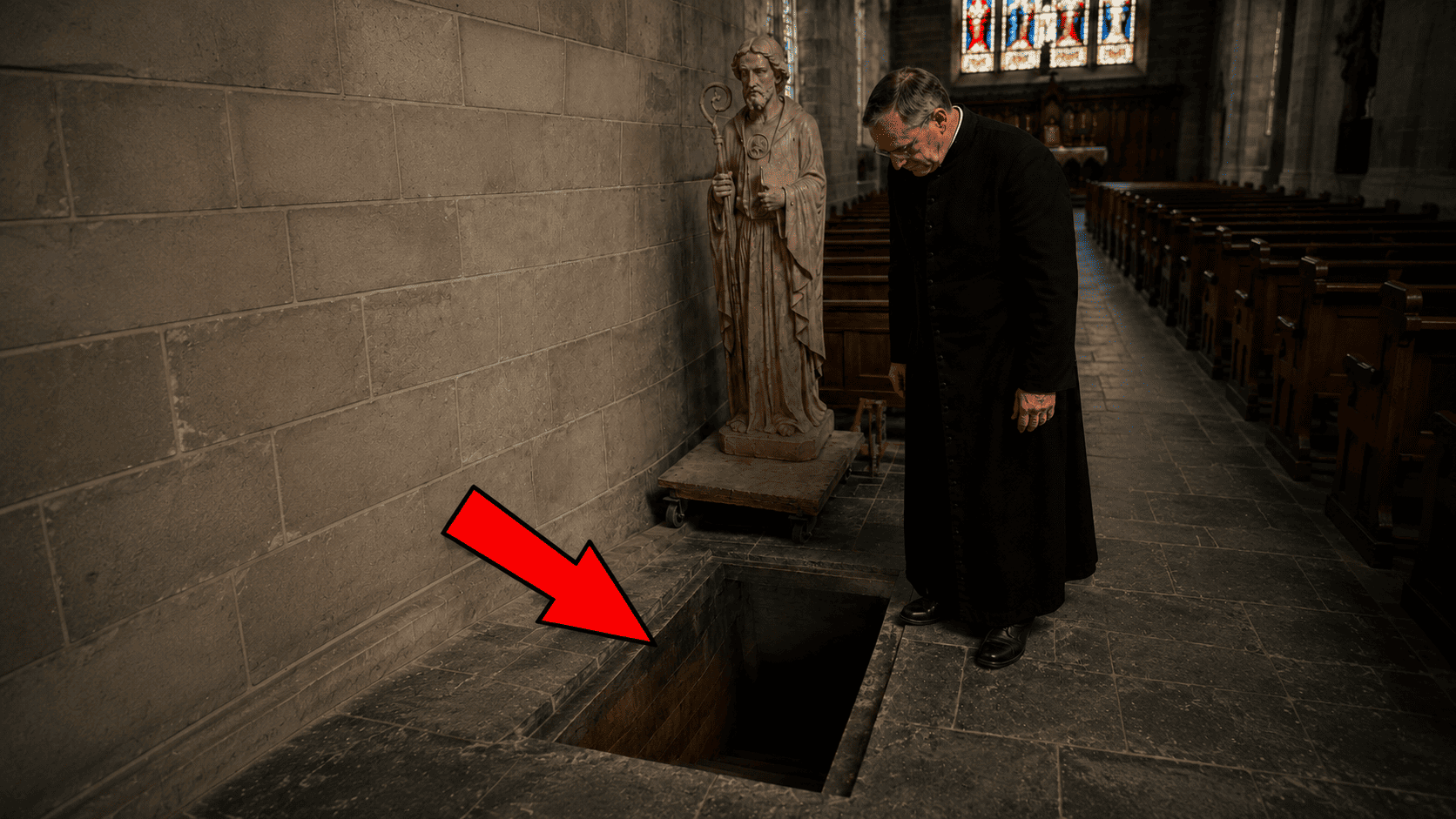
A priest moved an antique statue of a saint and found a hidden tunnel beneath. What was on the other end shocked the entire town.
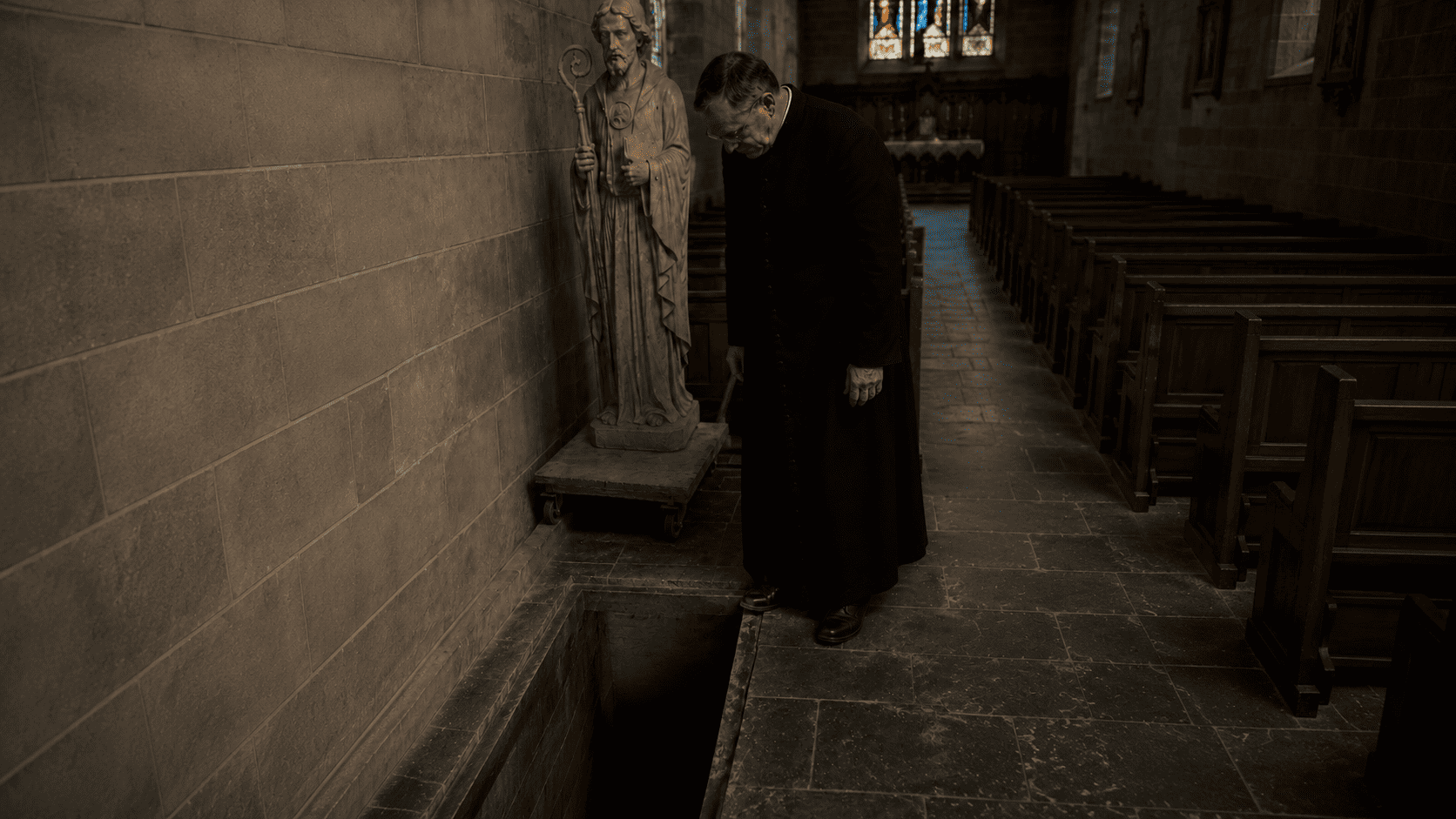
Father William moved the St. Benedict statue during renovations, revealing a heavy iron ring in the floor. Pulling it open revealed a dark stone staircase he had never known before. Recognizing its historical significance, the priest immediately contacted local historian Dr. Arthur Vance.
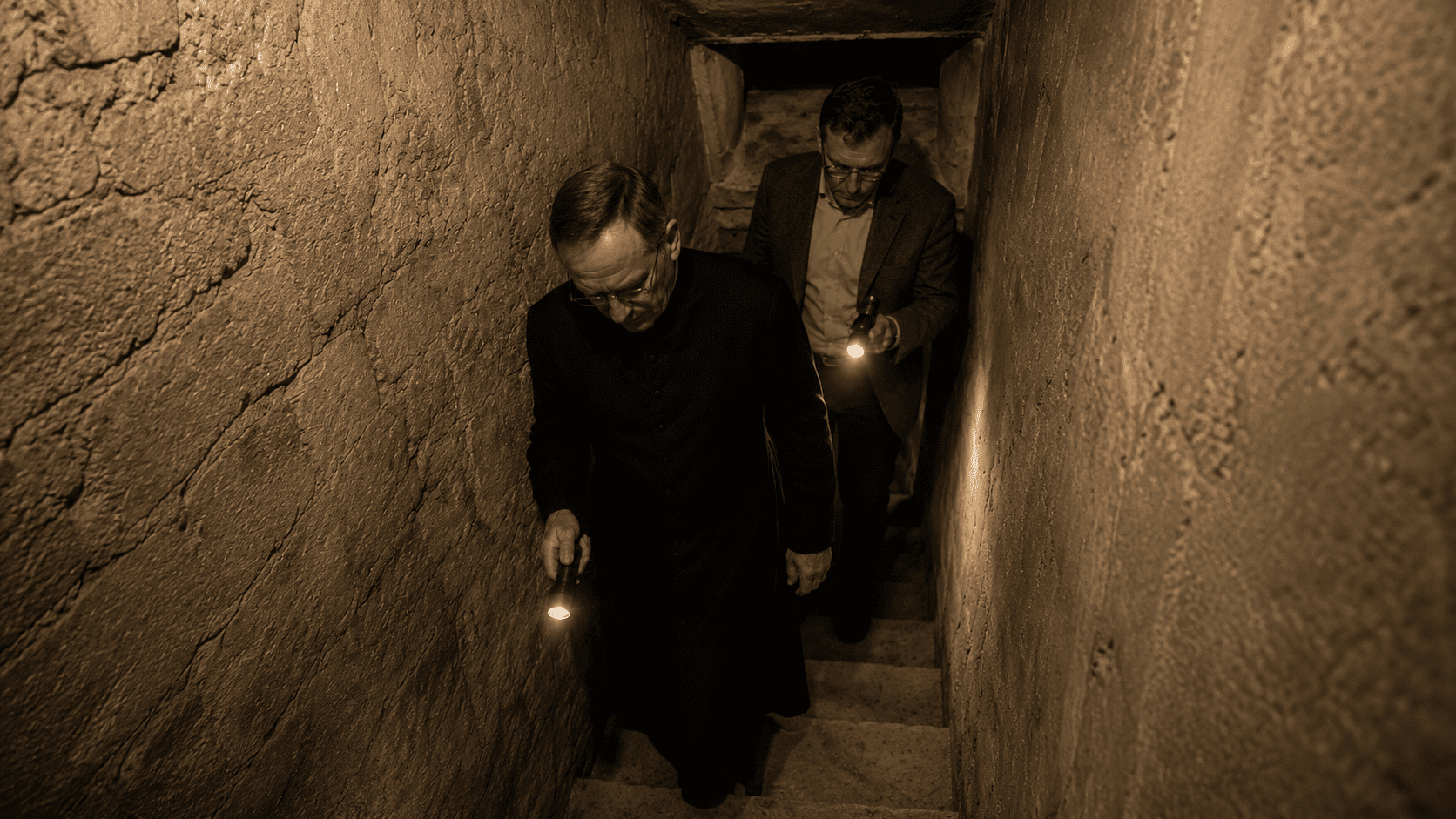
Upon his arrival, Father William and Dr. Vance immediately descended, each armed with a flashlight. The narrow stone passage led deep underground, and the walls on either side were covered in strange symbols carved centuries ago.
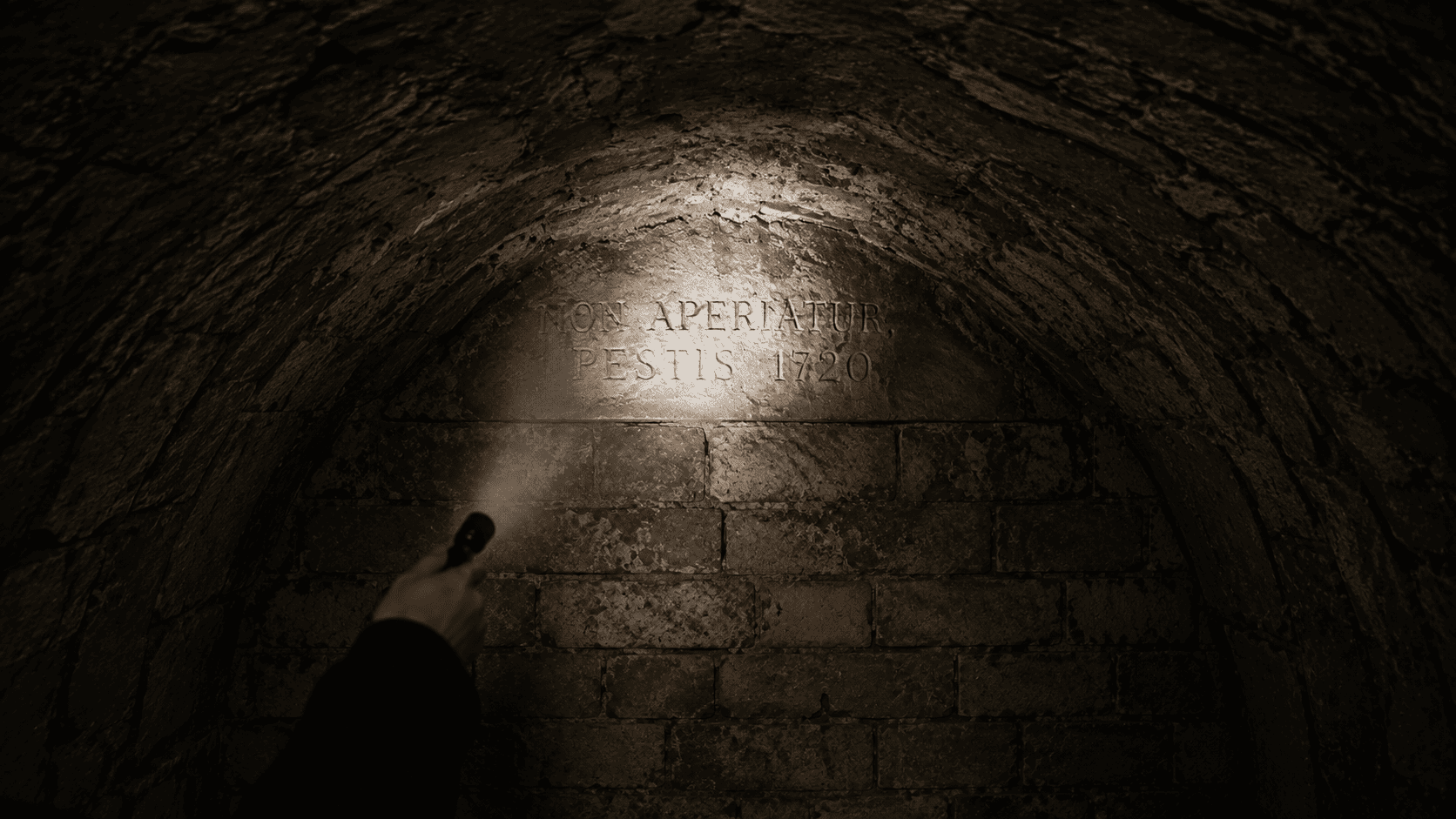
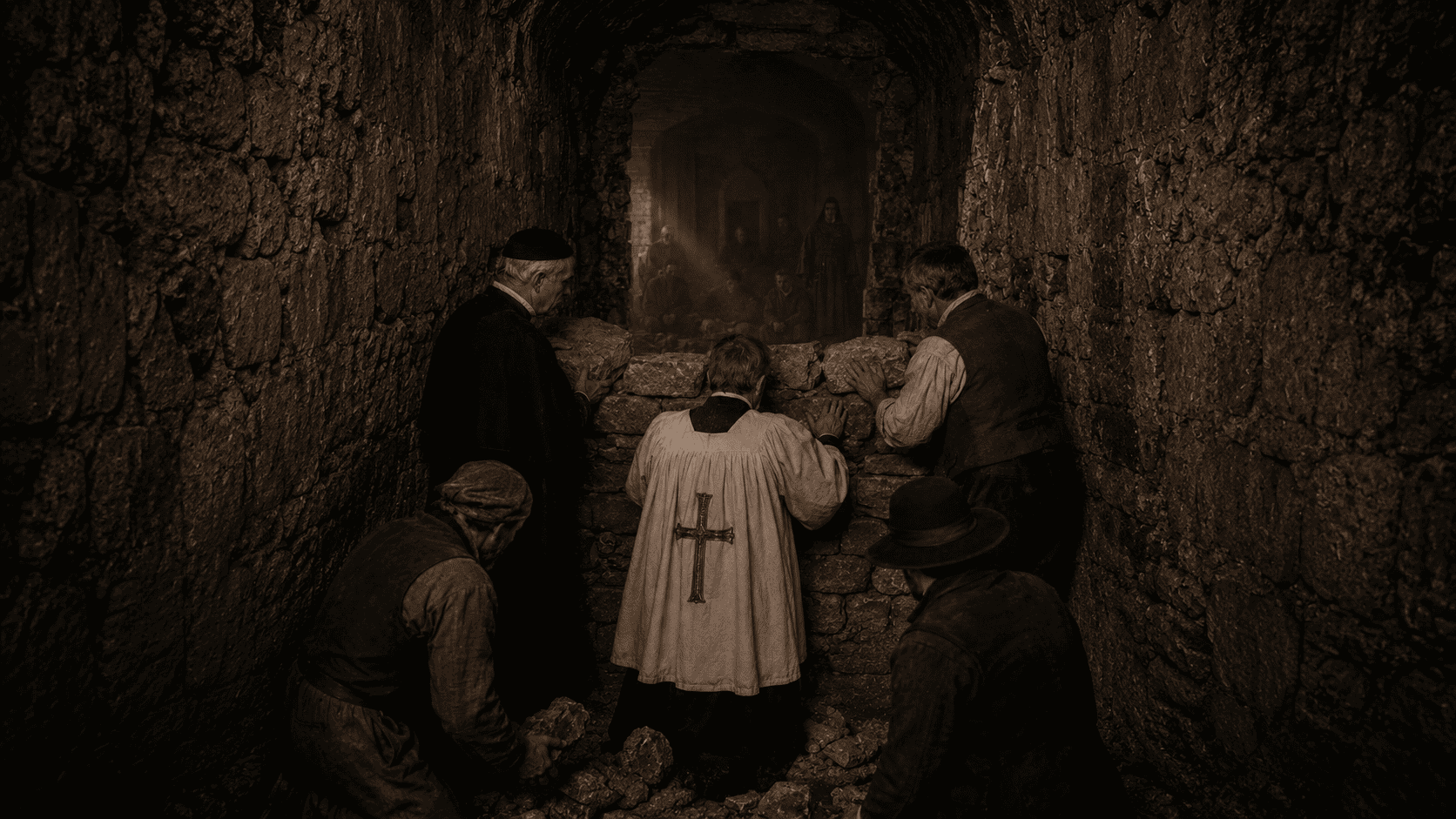
The passage ended deep underground at a solid brick wall sealed with thick mortar. Above the seal, a Latin inscription was carved into the archway. Dr. Vance studied it closely — and then fell silent. He had identified it as an ancient warning.
They alerted the police, who arrived with heavy breaching tools. As an officer swung a sledgehammer and shattered the wall, a cloud of thick dust burst inward. Everyone gasped in shock at what lay beyond.
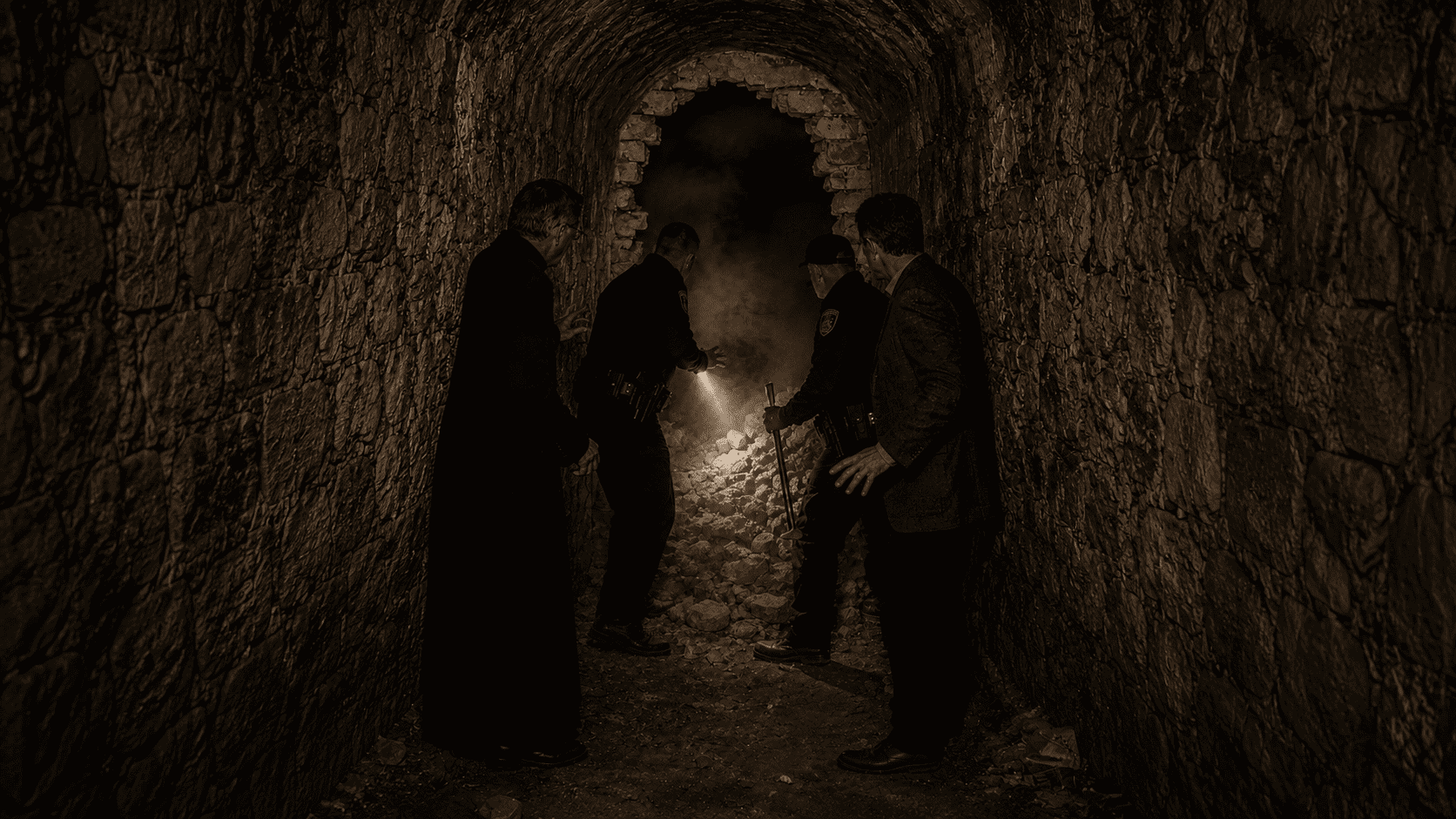
Beyond the wall was a vast sealed crypt containing the skeletal remains of dozens of people scattered across the floor. The sight was overwhelming — row upon row of bones in the darkness, untouched for over three hundred years.
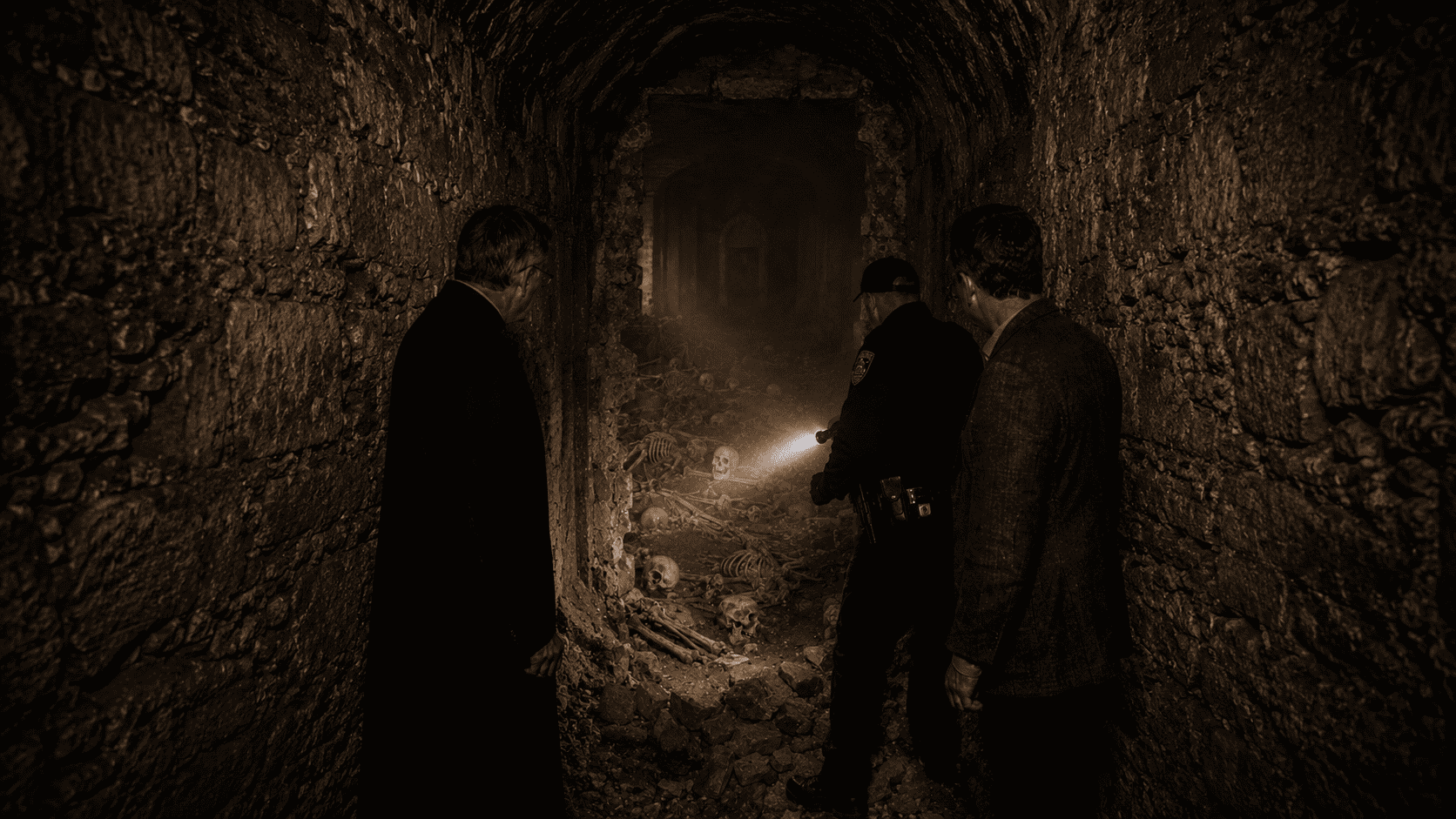
Dr. Vance finally translated the chilling inscription: “Non aperiatur, pestis 1720,” meaning, “Do not open, plague 1720.” Historical documents recovered inside the crypt revealed the full truth — a dark secret hidden for centuries.
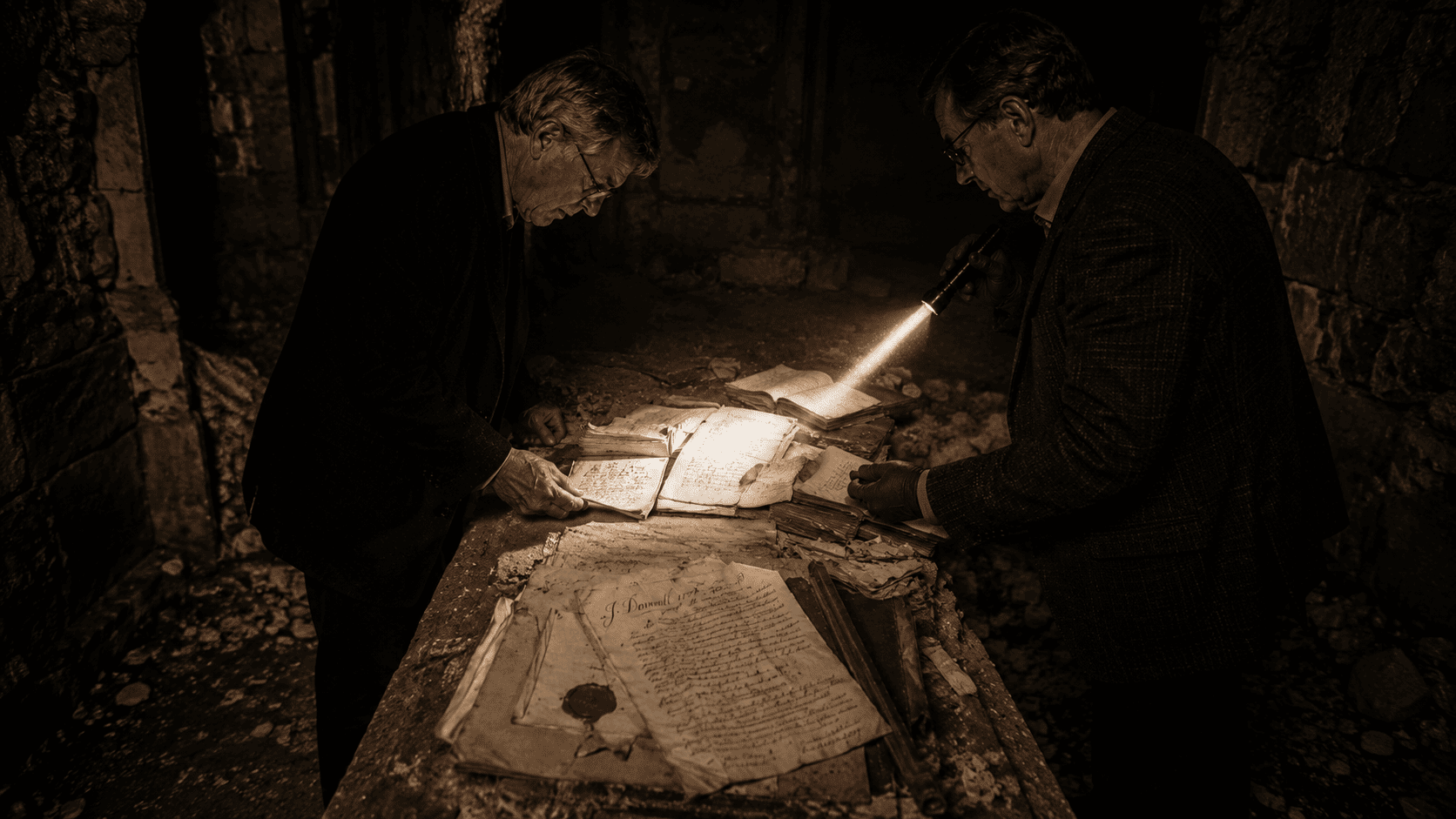
These were 18th-century townsfolk and local friars infected with the plague. To save the town, church leaders had quarantined them inside the crypt to die — locking the doors and sealing the entrance, covering up the tragedy for centuries.
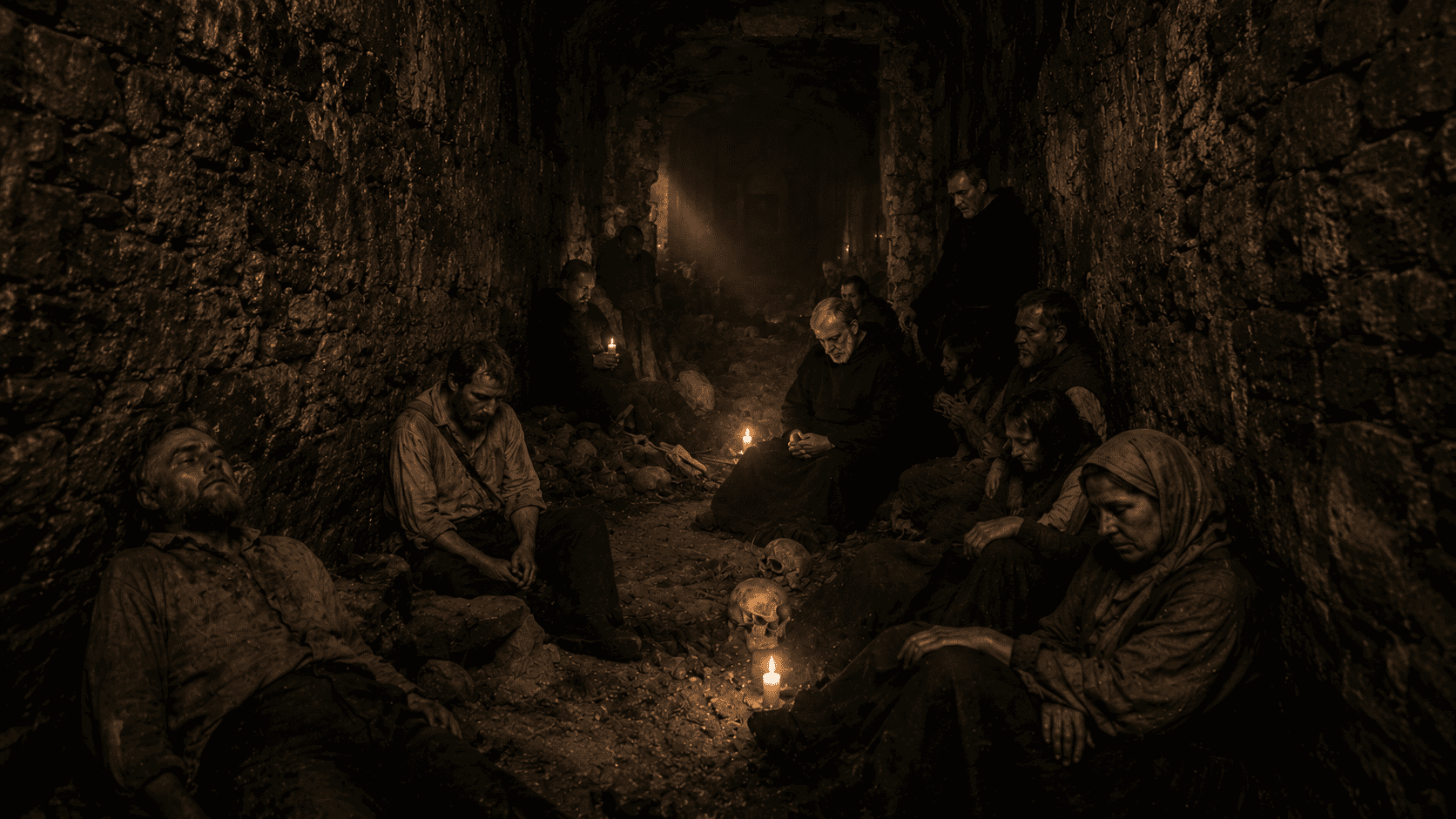
The discovery finally brought closure to the descendants of those abandoned. Church leaders had ordered the crypt sealed and the entrance hidden beneath the statue of St. Benedict, ensuring the tragedy would never be spoken of again.

Leave a Reply