
You asked for Part 2. Here it is — the full story.
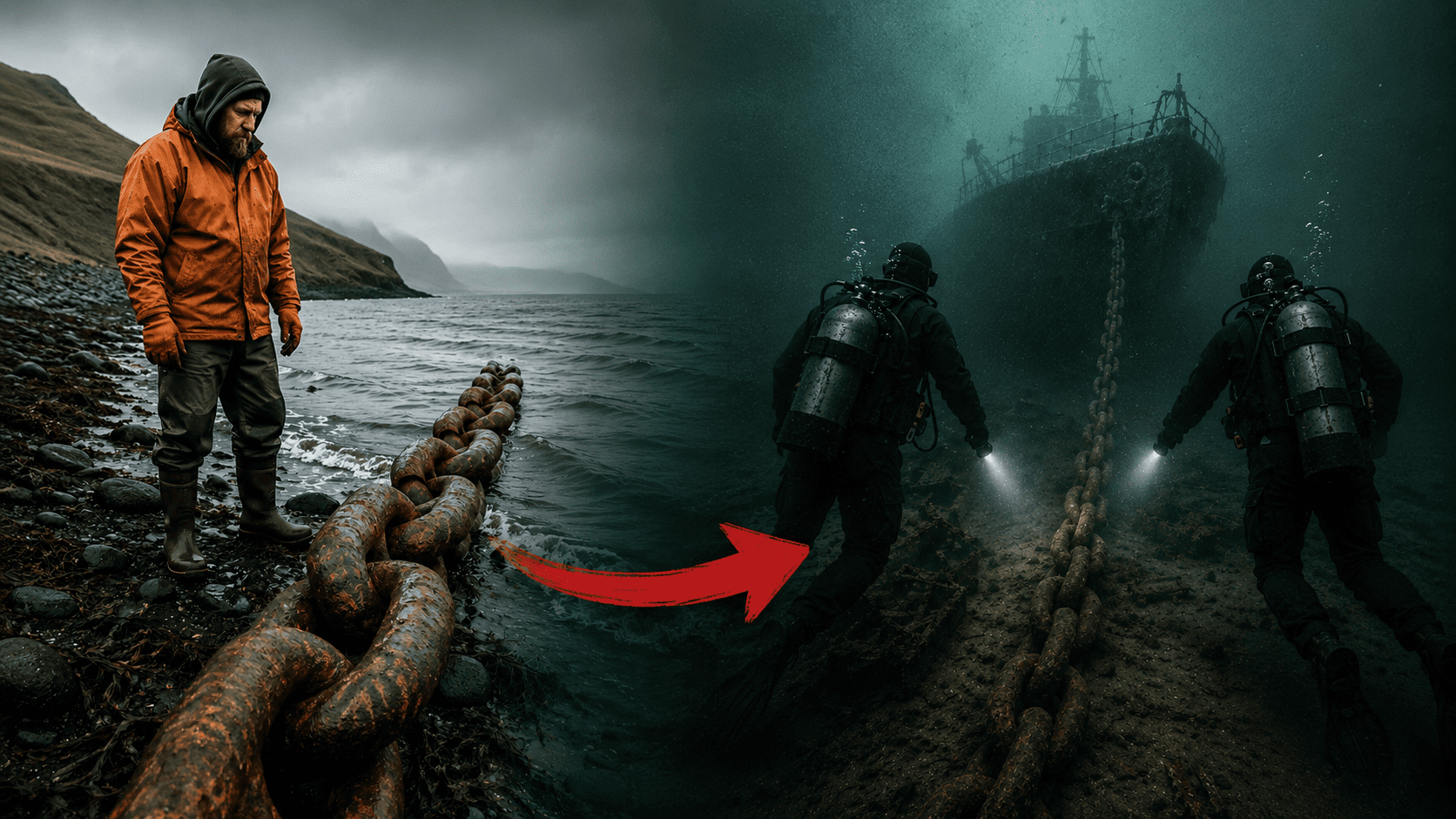
Fisherman Joel Barnes was exploring the shores of Attu Island in Alaska when he noticed an enormous rusted chain partially buried in the shoreline gravel. Its thick links looked decades old, and the chain stretched silently into the sea.
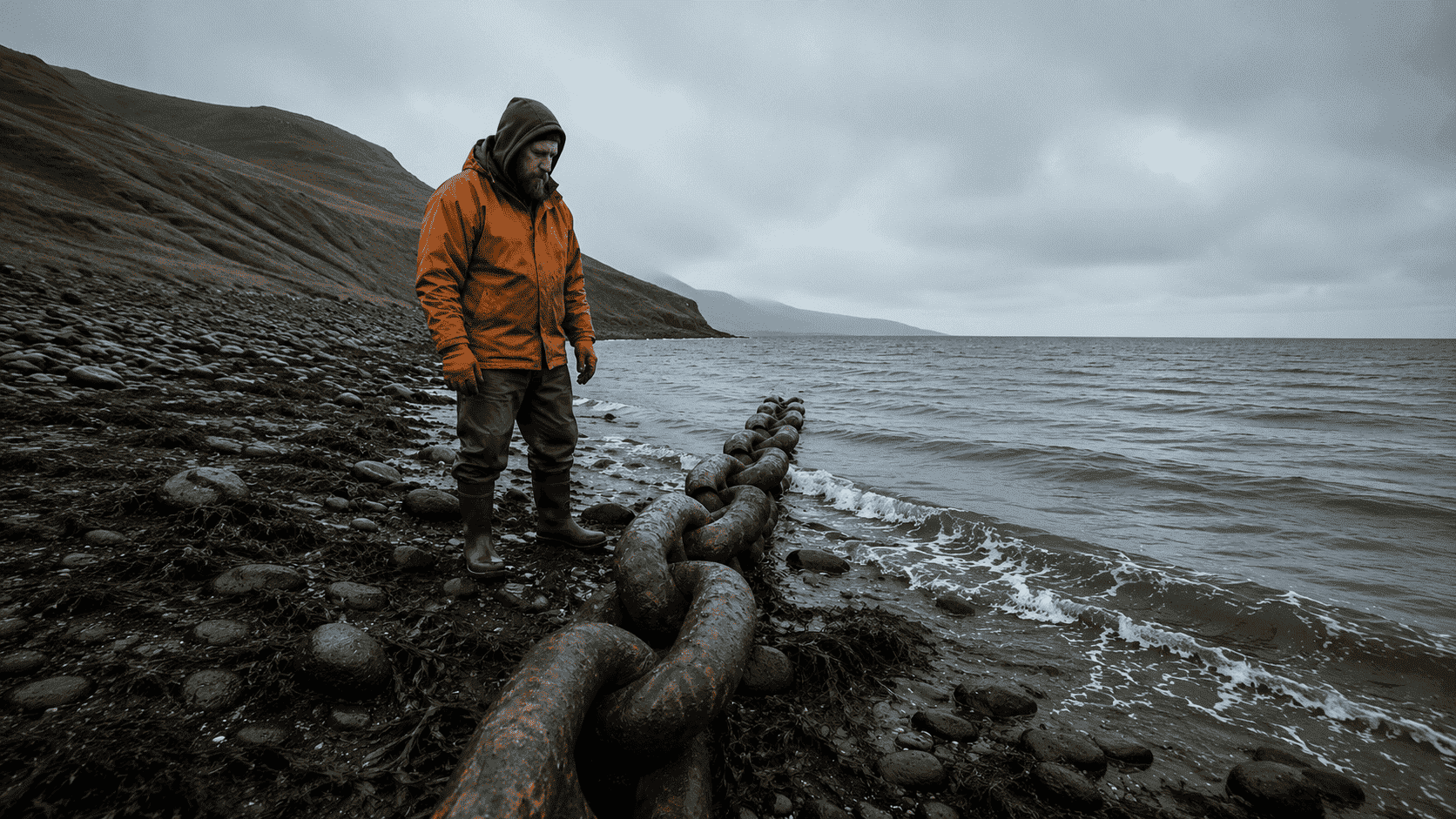
Startled by the sheer size, Joel took several photos and alerted the Coast Guard. The links were each the size of a car tire — clearly not from any ordinary vessel. Whatever was on the other end of that chain had been sitting undisturbed at the bottom of those icy waters for a very long time.
Days later, a diving recovery crew arrived to investigate the mysterious chain. As divers followed the links into deeper waters, they realized it hadn’t shifted with the tides, suggesting the chain would lead to something massive.
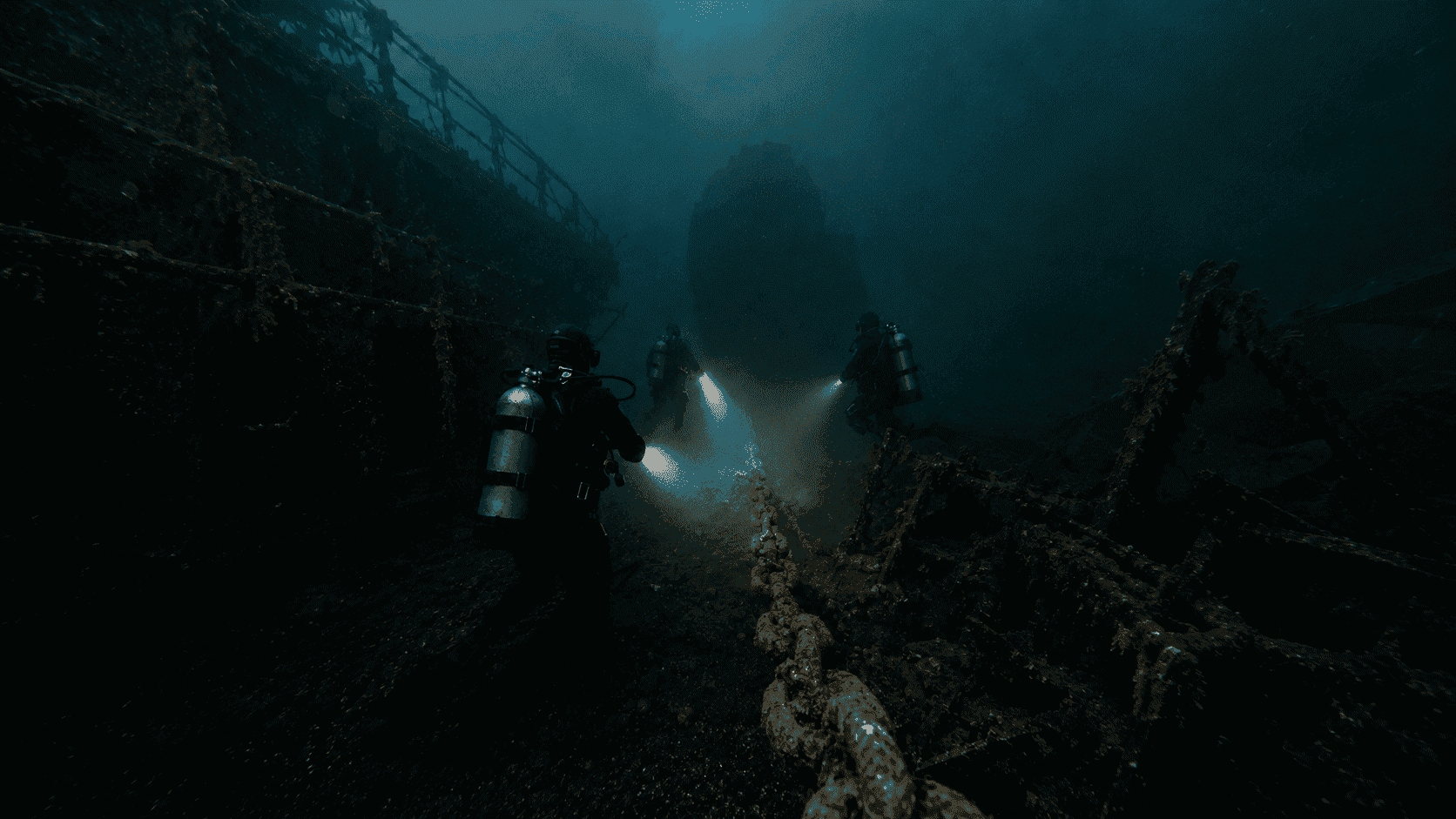
Nearly 80 feet down, the water was near-freezing and visibility was limited to a few feet. The divers communicated only by hand signals. One of them later described the experience: the chain seemed to vibrate slightly, as if the wreck below was still somehow alive.
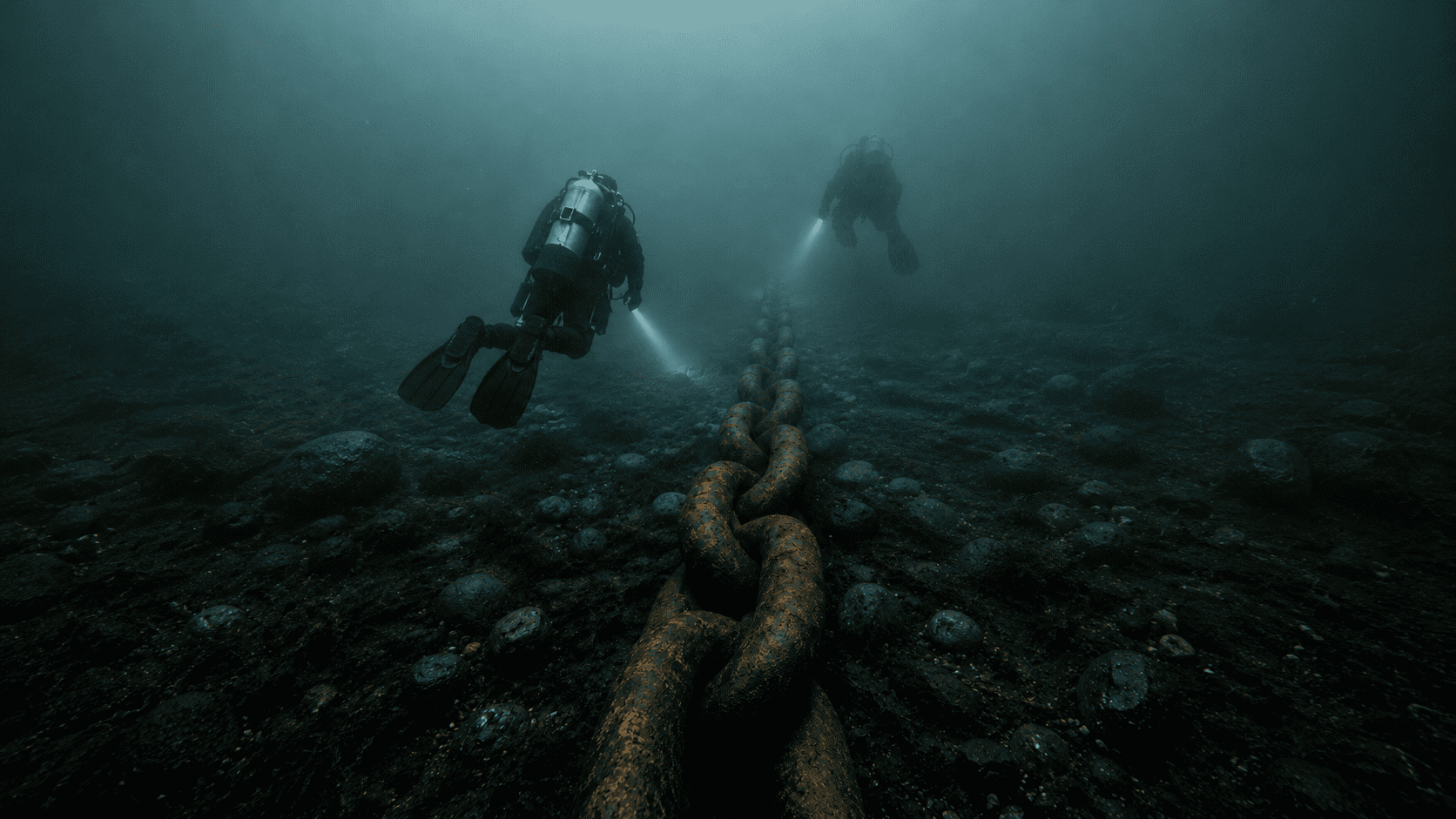
They finally discovered the chain was bolted to the anchor of a submerged vessel. The hull was massive — easily over 300 feet long. And it was sitting completely upright on the seabed, almost as if it had simply been parked there.
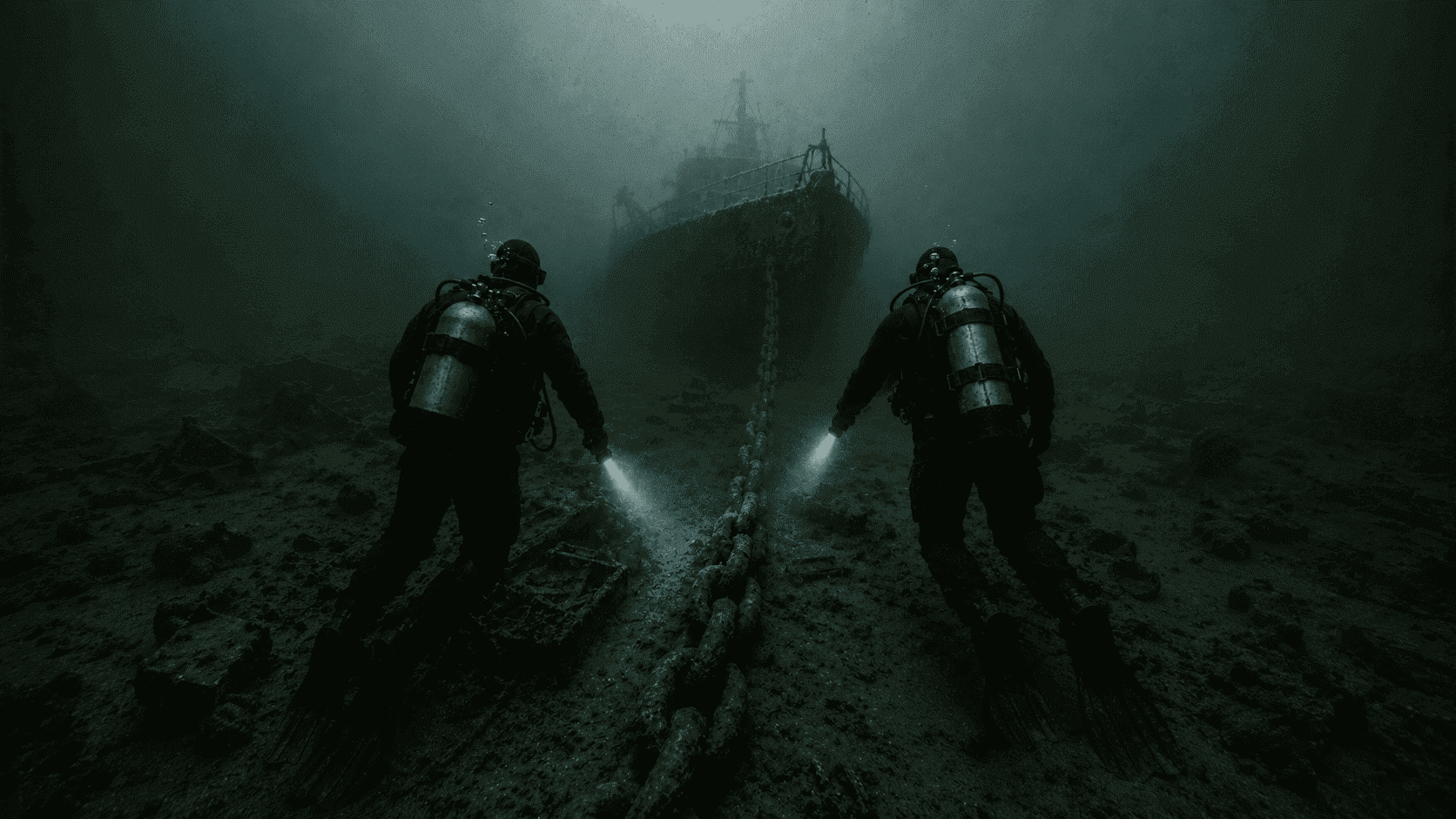
But the moment they shone their lights into the broken hull, everyone monitoring the operation turned pale. Inside the deteriorating warship, divers found fully intact artillery shells, corroded sea mines, and live grenades still capable of detonation.
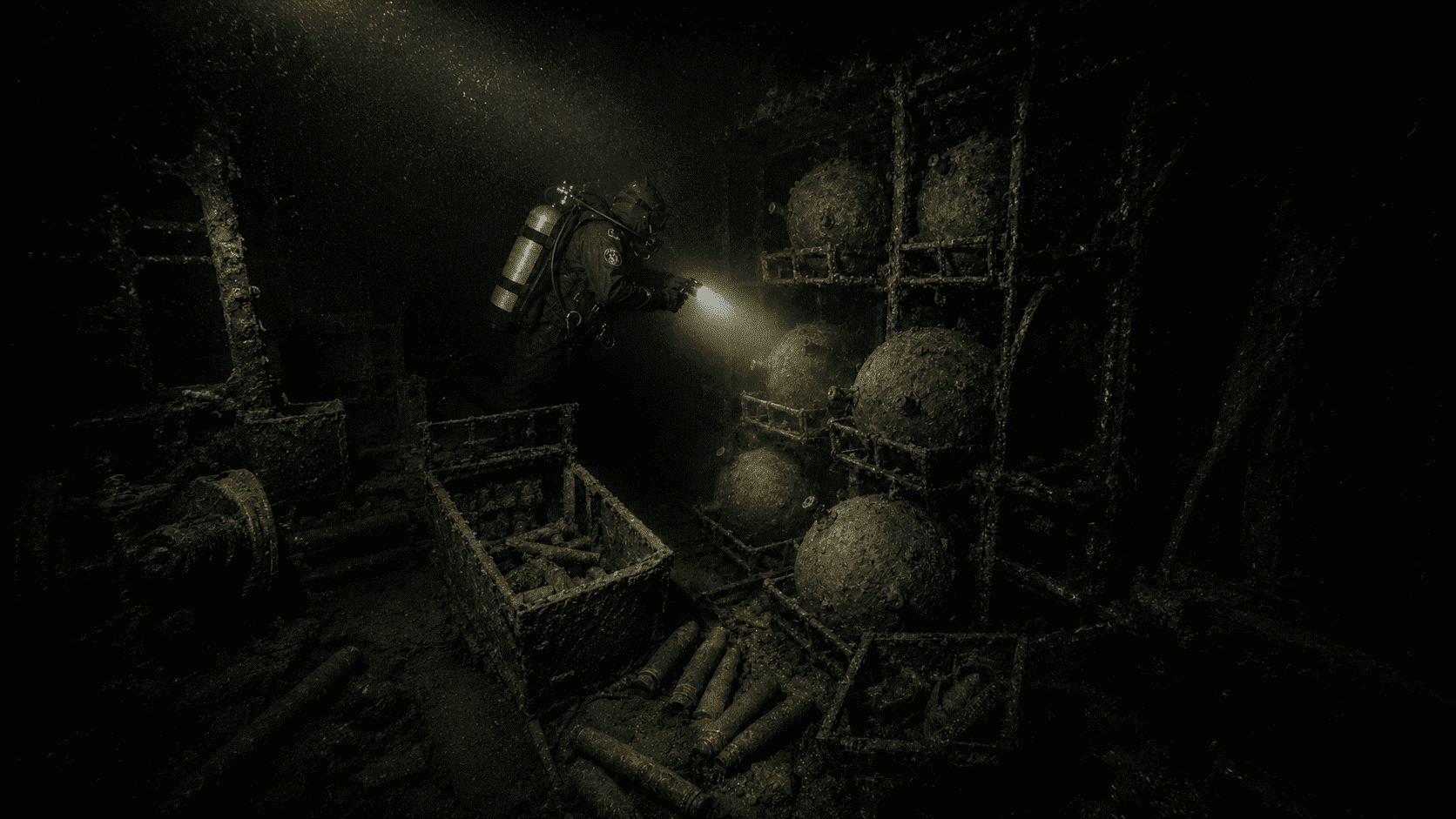
Military historians quickly identified the vessel as a World War II warship, likely sunk in battle and lost due to Attu Island’s extreme isolation. Attu was the site of one of WWII’s most brutal and forgotten battles — the only land battle fought on North American soil during the war — where American and Japanese forces clashed in 1943 in the freezing fog.
Explosive disposal teams were flown in immediately to secure the scene. Over the course of two weeks, they carefully extracted and neutralized dozens of munitions — some of which had been sitting loaded and ready to fire for over 80 years.
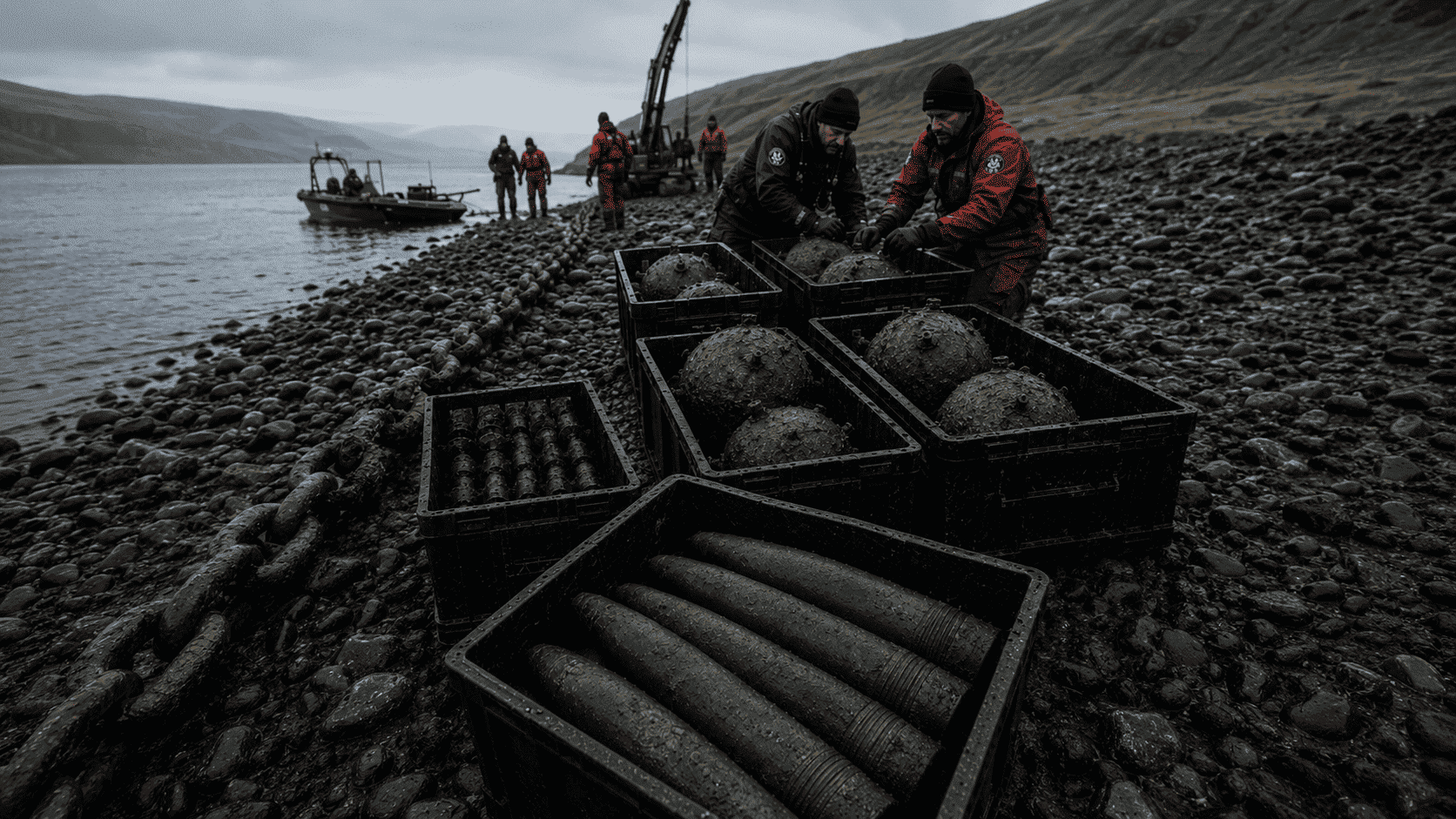
And while the immediate danger was neutralized, the mystery of how a fully armed warship ended up there — untouched for decades, in one of the most remote corners of North America — has fascinated military historians and ocean explorers ever since.
Joel Barnes, the fisherman who started it all with a simple walk on the beach, put it best: “I just pulled on a chain. I had no idea I was pulling on history.”
⭐ Enjoyed this story? Follow Space Rabbit Hole on Facebook for new mysteries every day. The full story always lives here. ⭐


Leave a Reply